Skip to content

Hiking in the dark: why would you?

Hiking in the dark: why would you?

It's already dark at five o'clock? That's no reason to stay indoors. On the contrary.

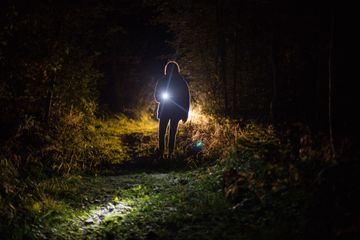
During the winter months, you head to work in the dark and come home in the dark. It’s tempting to curl up on the couch and leave your walking shoes in the closet until spring. But that’s a shame. More and more research shows that an evening walk, when it’s dark outside, actually gives your body and mind a little something extra. In this blog, you’ll learn why—and how to do it safely.

Hiking in the dark: why would you?

Your biological clock runs more smoothly

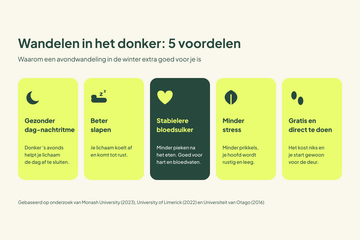
Your body operates on a day-night cycle. Light during the day, dark at night. Lights and screens disrupt that cycle.

How significant is this effect? Researchers at Monash University tracked nearly 87,000 people using a light sensor on their wrists. The results: people who were exposed to a lot of light at night were more likely to suffer from depression and anxiety. Those who were exposed to plenty of daylight during the day, on the other hand, were less likely to experience these issues. A follow-up study from 2024 even found a link to a higher risk of premature death.

The advice is simple: light during the day, dark at night. An evening walk helps with this. You leave the lights and screens behind. This sends a signal to your body that the day is over. Your body will then start producing melatonin, the hormone that prepares you for sleep.

You'll sleep better

People who exercise sleep better. An evening walk is especially helpful: being outdoors causes your body temperature to drop slightly. Your body needs that to fall asleep.

Tip: Take a walk 1 to 1.5 hours before bedtime. Twenty to thirty minutes at a leisurely pace is enough.

Your blood sugar levels will remain more stable

After eating, your blood sugar rises. Going for a short walk helps your muscles absorb that sugar. In 2022, the University of Limerick compared the results of seven studies. Short, light walks kept blood sugar levels an average of 17 percent lower than sitting still.

The University of Otago conducted a study on people with type 2 diabetes. Walking for 10 minutes after each meal was more effective than walking for half an hour at any one time: blood sugar levels were 12 percent lower on average. The difference was greatest after dinner, at 22 percent. This makes sense, since we often eat the most in the evening and get the least exercise.

Your mind goes blank

After a busy day, your mind often keeps racing. Going for a walk helps: your stress hormones drop, and you relax. There are also fewer distractions after dark—less traffic, less hustle and bustle. You hear and smell more. That’s how you truly wrap up your workday.

Looking up also helps. In 2024, British researchers discovered that people who feel connected to the night sky experience better mental well-being. So, gazing at the moon or the stars does more than you might think.

You'll stay active, even in the winter

We tend to be less active in the winter. But that’s exactly when exercise is important—for your heart, your immune system, and your mood. An evening walk is easy: hassle-free —it’s free; just head out the door after dinner. Take the dog with you, or go for a walk with your partner or neighbors.

Want to get active together? At the ZekerArbo FiTClub, you’ll work with other entrepreneurs to boost your vitality. With events throughout the year. Check out the FiTClub →
Hiking in the dark: why would you?

Walking Safely in the Dark

In the dark, you can't see as well, and others can't see you as well. These five tips will help you stay safe on the road:

  • Make sure you stand out. Wear something reflective, such as a vest or a reflective strip. That works better than bright colors.
  • Bring a light with you. A headlamp or flashlight will help you see any uneven spots. A red light will interfere with your night vision the least.
  • Choose a familiar route. Save exploring new routes for daytime.
  • Let someone know where you are. Tell someone which route you're taking, or go for a walk together.
  • Watch out for slippery surfaces. Wet leaves and frozen tiles are slippery. Wear shoes with good traction.

What can you do as an employer?

Vitality doesn't stop at 5:00 p.m. As an employer, you can help your employees stay fit even in the winter:

  • Encourage a lunchtime walk. This way, employees get some daylight during the day. Daylight during the day and darkness in the evening complement each other.
  • Leave the evening alone. Don't send emails or text messages after work so that employees can truly unwind.
  • Look beyond sports. Make sure your wellness policy also addresses sleep, light, and relaxation.

Is employee wellness a priority at your company? ZekerArbo works with you to develop strategies for prevention and wellness. hassle-free. Contact us →

Time to go outside

An evening walk is good for your body clock, your sleep, your blood sugar, and your mind. And it only takes half an hour. So: put on your coat, strap on your reflective band, and head outside.

Already a customer of ZekerArbo? Contact your account team to discuss wellness in your company. Not a customer yet? Visit zekerarbo.nl to learn how we help small and medium-sized business owners with Sickness Absence , and prevention.


Sources

The studies are in English. The titles above are freely translated.

More articles

All posts