Employer, do you know the family caregivers in your organization?
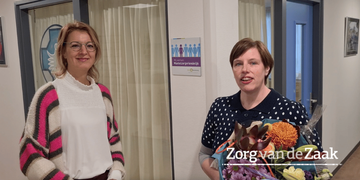
There is a good chance that someone in your organization is a family caregiver. What does this mean for you as an employer? Company social worker Janine Dijkman (Gimd) tells you what you need to know about informal care.
Did you know that a quarter of employees in the Netherlands are also caregivers? This is according to research by the Social and Cultural Planning Office (2020). Mantel care is unpaid and often long-term care for loved ones, for example a partner, parent or child. "Informal care is indispensable, but also often invisible," says Janine Dijkman. She is a corporate social worker and informal care coach at Gimd, part of Zorg van de Zaak.
Combining informal care with work is a big challenge
That invisibility carries risks, Dijkman emphasizes. She explains that family caregivers must guard against overburdening themselves. "They find it difficult to find a good balance between work, care and private life. That can lead to Sickness Absence or stress."
Research by the Social and Cultural Planning Office (SCP, 2019) shows that employees who combine work and informal care are at greater risk of dropping out. "Mantel care often comes your way unexpectedly, you usually don't have time to make a good long-term plan," says Dijkman.
Offering help as an employer
That is why it is so important that employers pay attention to this issue. Dijkman: "If you as an employer provide timely support, you can prevent overloading."
But only half of all employees who provide informal care tell their supervisor. In fact, many informal caregivers do not know that an employer can help. Sometimes they also don't dare bother their boss with private matters.
Accessible and open
So make informal care a topic of discussion in your organization so that you can provide timely assistance. Actively ask about it and watch for signs. "Being accessible is important," says Dijkman. "Ask your employee what he needs to combine work and care responsibilities."
One way to make such topics negotiable in a timely manner are FiT talks. The abbreviation stands for Functioning in the Future. They are open conversations about everything to do with vitality and ambitions. They have no fixed format and there is no reward attached to them, like a performance review. During a FiT discussion, employees themselves can indicate that they need help. Read more about the FiT method here.
Leave, flexibility and understanding
So what can you do to help? As an employer, you have all kinds of ways to support someone. Consider flexible working hours or care leave. "Room to arrange can already make a big difference," says Dijkman. "That is, you give your employee more flexibility to arrange things during working hours. Think about doctor's appointments, for example. Look together at what is possible: can a colleague temporarily take over the work? And can your employee make up work time at another time?"
Help your employee take enough time for themselves as well. The danger is that employees put all their leave hours into informal care, leaving them no free time to recharge. That can lead to overwork.
SCP research shows that flexibility and managerial understanding are important to prevent dropout. Leave options are also valuable to combine informal care and paid work in the long run. How you can best help an employee varies by organization and individual. "It is always customized," says Dijkman. "Are you unsure about solutions? A family care coach can help."
What does a family care coach do?
A family care coach helps your employee find a better balance. Such a coach provides information and advice. He can also help employees set boundaries (time management) and make better agreements about care tasks. "If your employee gets a grip on the situation, he can prevent overburdening," says Dijkman.
November 10 is Mantel Care Day. A good time to make a plan to support the family caregivers in your organization, Dijkman believes. "My most important tip for employers: start the conversation and accommodate your employee. There are countless ways to support family caregivers and it pays off. After all, you can make an important contribution to preventing them from dropping out."