Skip to content

The sense and nonsense of Blue Monday. In conversation with Wietske van Veenen.

The sense and nonsense of Blue Monday. In conversation with Wietske van Veenen.

In conversation with employability coach Wietske van Veenen

Every year it happens again. The holidays are over, New Year's resolutions are faltering, and summer feels further away than ever. And then suddenly it's Blue Monday: supposedly the most depressing day of the year. But is that really true? Or is it mainly a clever marketing ploy?

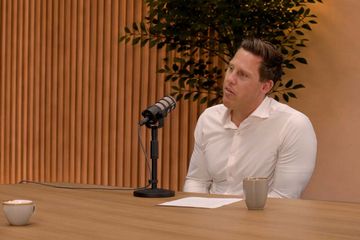
For this blog, we spoke with Wietske van Veenen, anemployability coach at ZekerArbo. Wietske provides daily guidance to managers and employees on Sickness Absence, stress, and employability. It's time to ask her some critical questions about Blue Monday. With a down-to-earth perspective, a touch of humor, and, above all, lots of practical insights.


Wietske, let's get straight to the point: does Blue Monday really exist?

Wietske: "Short answer? No. Long answer? Also no, but with some nuance. Blue Monday was once conceived by a marketing agency and is based on a 'formula' that makes no scientific sense. There is no evidence that one specific Monday in January is demonstrably gloomier than other days."

That said, many people do experience more gloominess or fatigue in January. Less daylight, cold weather, busy schedules, and New Year's resolutions that are already falling by the wayside... All of that can really affect your energy levels.

So is Blue Monday mostly nonsense?

Wietske: "The concept itself, yes, but not the feeling behind it. And that distinction is important. If you say, 'Oh, come on, Blue Monday is nonsense, don't be silly,' then you're missing an opportunity. Because people can genuinely feel less fit or motivated. Not because it's Monday, but because their batteries are running low. I see this a lot in my work. Among employees, but just as much among managers. People who keep going, take responsibility, keep their team going... and in the meantime, put themselves on the back burner. And that doesn't work."

Sustainable employability does not begin with working even harder, but with taking an honest look at yourself: how am I doing? Where am I running out of energy? And what do I need to recharge?

“Blue Monday could be a good hook for that. Not to make it heavy, but to open up the conversation. About energy. About recovery. About how you can keep up this work all year round.
And sometimes, one good conversation is really all it takes.”

“At ZekerArbo , we therefore prefer ZekerArbo at patterns rather than just one day. How is someone doing structurally? What about work pressure, recovery, and control?”

What do you observe in employees during this period?

Wietske: "Many employees say they feel tired, less focused, or more irritable. That's not burnout, but it's often a sign. A sign that the balance between work and relaxation isn't quite right."

“And let's be honest: January is also just a tough month. Work continues, targets remain in place, and in the meantime, there is little that gives you energy. That's when you have to be extra conscious about taking time to recover.”

“And what about managers?”

Wietske: "They often feel double pressure. They have to stay strong themselves and keep their team motivated. What I often see is that managers put themselves last. 'First the team, then me.' But that's not how sustainable employability works."

“Setting an example is particularly important during this period. Take breaks yourself. Indicate that you also experience occasional setbacks. This will make conversations within the team much more comfortable.”

Some organizations do something fun on Blue Monday: treats, workshops, extra attention. Good idea?

Wietske: "That depends on how you approach it. If it's just a gimmick – 'here's a cupcake, good luck' – then it adds little value. But if it's a reason for a good conversation, then it can certainly be valuable."

For example: use Blue Monday to discuss energy, work pressure, and recovery. Not in a gloomy way, but in a practical way. What helps you get through your workday? What drains your energy?

"What specific recommendations do you have for employers?"

Wietske: “Three things:

  1. Normalize the conversation about energy. Not just about performance and Sickness Absence, but also about how someone is feeling.
  2. Look ahead. January is a good time to consider together: how can we sustain this work throughout the year?
  3. Involve professionals at an early stage. An employability coach can help you take preventive action without immediately taking over everything.

The great thing is: you don't have to make a big deal out of it. A good conversation often does more than a poster saying 'Happy Blue Monday!'."

You just mentioned preventive work. How does Blue Monday fit into that?

Wietske: "Blue Monday can be a hook. Not to emphasize gloominess, but to make positive stress and recovery discussable. Stress is not necessarily bad. A little tension helps you stay sharp."

“The problem only arises when there is too little recovery. That is where employers can reap the greatest rewards: by setting realistic goals and providing sufficient autonomy and space to recharge.”

What do you say to employees who think, "It's my fault that I feel this way"?

Wietske: "Then I say: you're not broken, you're tired. And tiredness doesn't require working harder, but recovering smarter."

“It helps to ask yourself: what can I influence? It could be something small, like going for a walk during your lunch break or setting clearer boundaries. Small choices often make a big difference.”

Finally, if you had to summarize Blue Monday in one sentence, what would it be?

Wietske: "Blue Monday isn't a problem, but rather an invitation. An invitation to reflect on energy, balance, and sustainable employability. Today and throughout the rest of the year."

And what does this mean for you as an employer?

Whether you believe in Blue Monday or not, January is an excellent time to focus on employability. Not with heavy-handed measures, but with genuine attention and practical support.

ZekerArbo employability coaches ZekerArbo managers and HR professionals conduct these conversations, stay in control, and stay Sickness Absence . Without taking over, but with results.

Would you like to know what this could mean for your organization? Then every Monday is a good time to start the conversation.

More articles

All posts